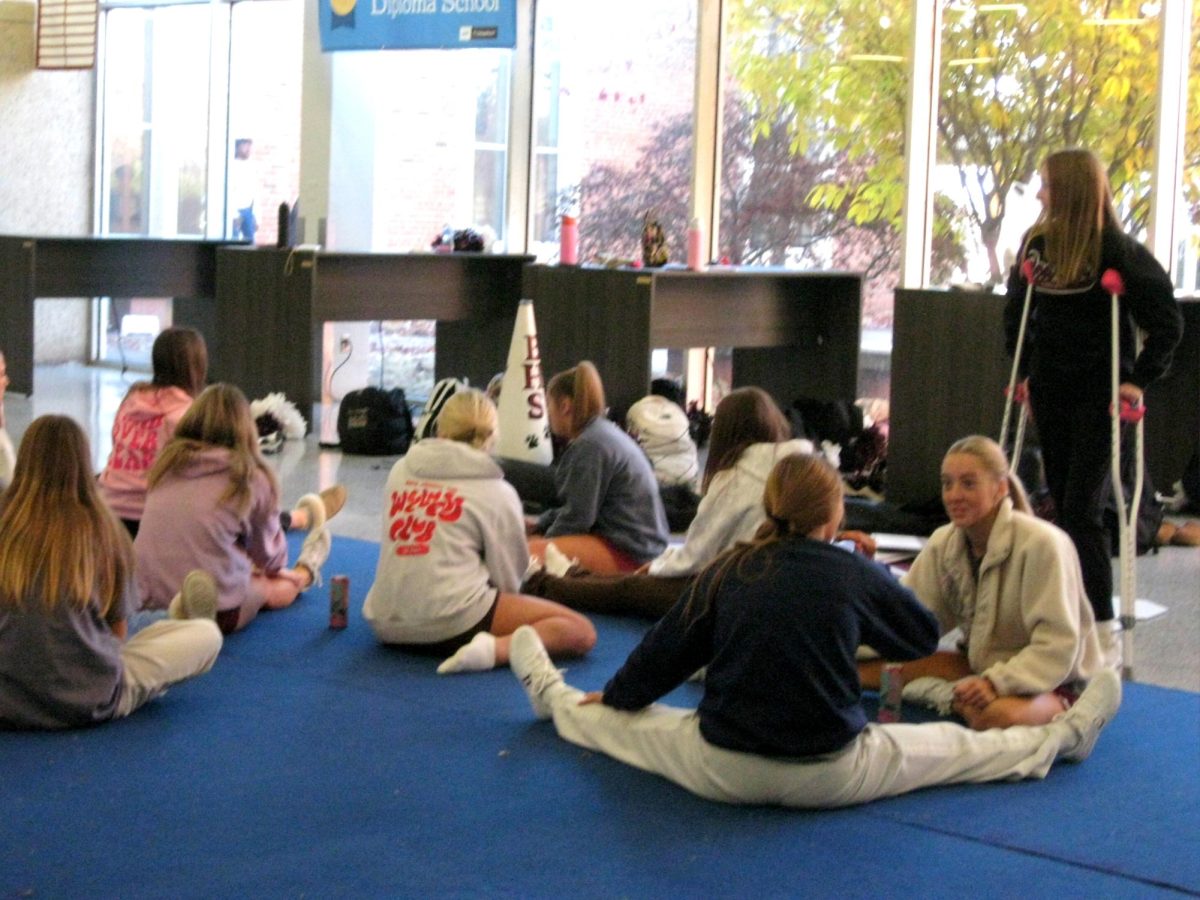
Editor’s note: This is the second in a three-part series on Bearden student-athletes recovering from and trying to prevent serious injury. The first installment was on how Bearden student-athletes stay plugged in to the community of their teams while injured, and the final will be how Bearden student-athletes are applying sports science to minimize injury risk.
One moment on the track, field, or court can change everything.
A high school athlete’s foot plants, the leg moves just the wrong way, and the pop they feel in their knee means a long road of recovery ahead.
ACL injuries are some of the most challenging setbacks to deal with, requiring months of rehabilitation and resilience, and many Bearden athletes have had to go through that process.
For senior volleyball captain Alyssa Spradlin, the injury came early in her club season, which started the winter of her junior year.
“I remember the day – January 25,” she said. “It was only the second tournament of the year.”
She went up for a hit on a tight set, a move she’d done “so many times before,” but this time she landed awkwardly. Her left leg was fully locked as she tried not to cross under the net.
Sophomore cheerleader Kennedy McVeigh had a similar shock. During cheer tryouts in May 2024, she was tumbling when her landing went wrong.
“I was spinning during a flip, and when I landed, I knew something was definitely wrong,” she said. “It wasn’t one of those, ‘I’ll be fine in 10 minutes’ things.”
Senior track athlete Caroline Hilliard remembers the same kind of pain.
Recovery has varied for each athlete. Spradlin returned to volleyball after a six-month recovery, even though she had not completely recovered.
“I started playing when I was probably 50%,” she said. “They say full recovery can take up to two years.”
McVeigh made her return in only four months with the help of her dad Jason, who is UT’s Senior Associate Athletics Director of Sports Medicine & Sports Performance.
“My dad tried to slow me down, but after I passed a test that proved both legs were equally strong, I was ready to come back,” she said.
Added Jason: “We approached Kennedy’s rehab like we do our college athletes. She started rehab the day of surgery and continued rehab every single day for months on end, not just going to a clinic a few times a week.”
Compared to typical expected recovery times from even a few years ago, both of those timelines are remarkably fast.
Best practice for ACL recovery used to mean scheduling surgery as quickly as possible to start the clock on a recovery that could take up to a year.
“There’s been a shift from a more conservative, standardized length protocol to a more accelerated and individualized one,” Bearden athletic trainer Kevin Pack said. “Some of the more modern recovery methods include the use of early weight bearing, open kinetic chain exercises, neuromuscular electrical stimulation, and blood flow restriction.”
Added Jason McVeigh: “We’ve learned over the years that delaying surgery for ACL recovery gives better outcomes than doing it immediately. Getting back your full range of motion and most of your strength and getting the swelling out of the knee before surgery leads to faster recovery after surgery.”
Hilliard recently went to the doctors and was told she is 70% recovered. She is continuing to avoid certain events, particularly long jump.
“I don’t want to tear it again, especially with college coming up,” she said.
All three athletes emphasized the importance of rehab throughout the process of recovery.
Spradlin’s early sessions focused on getting her leg straight and bending again after tearing both her ACL and meniscus.
“PT was all about getting out of my comfort zone, learning to put weight on my leg and regain mobility safely,” Spradlin said.
Kennedy McVeigh took a similar approach, combining strength work and, later, biometrics.
“I did lots of things, basically all kinds of running movements, bands, and weights,” she said. “The more exercise you do, the more muscle you build before surgery.”
Aside from strength training, prehab was especially important for Hilliard.
“You lose so much muscle during surgery,” she said. “Having full range of motion beforehand helped me come back faster.”
The hardest parts weren’t always physical. Prior to the injury, Spradlin was a six-rotation starter and team captain.
“Going from never coming off the court to basically being an assistant coach is such a hard flip,” she said. “You feel like you’re letting your team down.”
McVeigh shared similar struggles.
“I think mentally it was almost harder than the physical challenges,” she said. “When you get injured in cheerleading, they get someone else to do your spot for you, so it’s really hard to watch someone do the thing you know you’re supposed to be doing.”
Pack said he sees many student athletes go through that same struggle.
“It’s important to acknowledge and be open about mental and emotional health,” he said. “They need to understand that they are still part of the athletic community and can find ways to still contribute to the team.”
Spradlin said she also gained new perspectives after studying the game from the sidelines.
“Now I can read the court better,” she said. “I try to play smarter, not harder.”
Since 2022, Pack said Bearden’s athletics department has had 10 reported ACL tears during official events, with three additional instances where Bearden athletes were injured outside of BHS athletics which were not reported.
He said that although football, soccer, and basketball remain the most common sports for ACL injuries, they can happen in any sport.
“Build confidence, overcome the fear, and trust the rehabilitation process,” he said. “Focus on what you can control, which is the level of effort, consistency, and mindset, rather than re-injury worries.”