Editor’s note: This is the final installment in a three-part series on Bearden student-athletes recovering from and trying to prevent serious injury. The first was on how Bearden student-athletes stay plugged in to the community of their teams while injured, and the second was on the shifts in how athletes recover from ACL tears.
In the heat of the season, athletes have no time to spare, making injury an often unimaginable reality. To prevent this, Bearden student-athletes are increasingly taking to preventative and rehabilitative practices to prime their bodies to perform at their fullest potential.
Across several sport disciplines, athletes are learning about the science behind high performance and how incorporating functional techniques may not only enhance their play, but minimize their risk of injury.
Proper fueling – during and after sessions – is essential to maximizing recovery and performance. Bearden’s lacrosse coaching staff makes sure to inform their athletes on the importance of nutrition.
“Student-athletes have different and higher nutrition needs than the general population, and they need to understand what those differences are,” said assistant coach Kellie Cope, who has a background in sports nutrition.
“Athletes simply cannot perform at their best without adequate calories, macronutrients, and micronutrients. We want our athletes to understand these basic concepts so they can properly fuel both their performance and most importantly their overall health.”
Added senior lacrosse player Kendall Coe: “Our coaches always have snacks for us to eat, and they teach us the importance of properly fueling. We have seminars for our coaches to teach us how to fuel your body.”
Bearden’s boys soccer team is encouraged to intentionally fuel before games, prioritizing carbohydrates and electrolytes.
“Our coaches recommend we eat plenty of carbs and to properly hydrate leading up to games,” senior soccer player Ethan Yeow said.
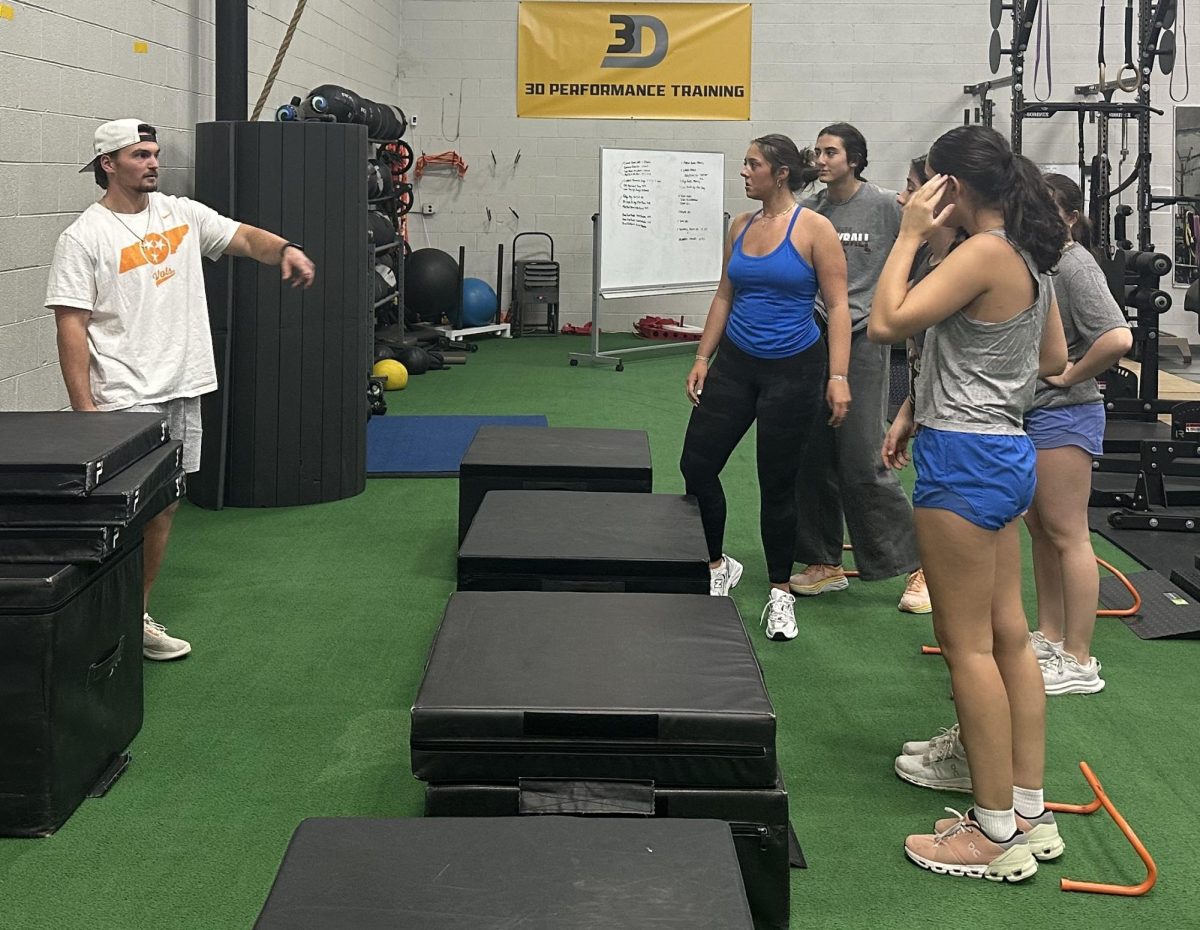
Team sports frequently require athletes to be able to stop, pivot, and sprint in any direction in an instant. These sudden movements often catalyze injuries like ACL tears, sprained ankles, or damage to other ligaments, sometimes requiring recoveries lasting several months. The lacrosse coaches have taken this into consideration when developing their strength and conditioning routine.
“Because every athlete is different, training should be individualized based on experience and movement ability,” Coach Cope said. “Once that foundation is in place, we can layer in lacrosse-specific demands like rotation and change of direction with a strong focus on core, hip, and lower-body strength.”
Added Coe: “We work on our speed, agility, and being able to shift and pivot our bodies better without causing injury.”
Bearden athletic trainer Kevin Pack agrees with Coach Cope’s philosophy. Oftentimes, there is no uniform warmup that athletes, even within the same sport, can perform in order to completely reduce risk of injury, making individual plans critical.
“It is much deeper than just conducting a sport-specific warmup, as it is not a one-size-fits all,” he said. “High level studies have shown that [warming up] assists in physiological benefits that help prime and prepare relevant body systems for the demands of the activity.”
Similar to lacrosse, tennis players utilize short lateral sprints to cover large areas of the court. This action, however, exposes the lower body to a multitude of injuries. ACL tears and rolled ankles are among the top injuries that players may experience. Senior tennis player Nitin Deshpande appreciates the warm-up the team completes in order to prevent any of these season-altering events.
“We usually do a dynamic warm-up to help us loosen up before we play,” he said. “We do drills to simulate the short lateral burst that you do in tennis because it’s really easy to roll your ankle when doing those movements.”
Added Yeow: “We make sure to do some kind of warmup to prepare our bodies and not get hurt.”
The lacrosse team has found it beneficial to alter their strength and skill training depending on intensity of the season. The team has found that placing higher intensity exercises early in the season allows for optimal recovery once the pace of games in-season ramps up.
“We focus more on skills [when lifting] in-season, and strength pre-season,” Coe said.
In doing so, players develop a strong muscular base to tolerate the load endured in-season which is refined as the team nears championship matches.
Coe has found similar benefits.
“Lacrosse is a very physical sport, so strengthening allows us to withstand hits better and run faster,” she said.
Not only does this training schedule maximize the athletes’ performances, but it limits injury throughout the season.
After extreme exertions, it is critical for athletes to properly recover to ensure their bodies remain fresh throughout the season. Yeow explains that the boys soccer team is expected to take these precautions in order to accelerate muscular recovery.
“We stretch as a team after each game, and are encouraged to take ice baths and use foam rollers outside of practice,” he said.
The lacrosse team follows a similar recovery system in an effort to remain fresh for their games.
“We are encouraged to use foam rollers after practice,” Coe said. “Some people like to use compression boots after games to reduce inflammation.”
Pack believes that the recovery habits of athletes of all levels are particularly important as they significantly impact their performance.
“Utilization of these tools are very helpful for athletes at all levels, not just high school athletes due to the many benefits associated with these modalities,” he said. “I am a huge advocate for prioritizing adequate sleep, proper nutrition, and the proper management of loads [rest days].”
Yeow shares some of the insight he has gained from playing a high school sport.
“Playing a sport in high school taught me a better understanding of how to prepare myself before practice and competition,” he said. “I’ve learned a lot more about how to take care of my body so I play at my best.”